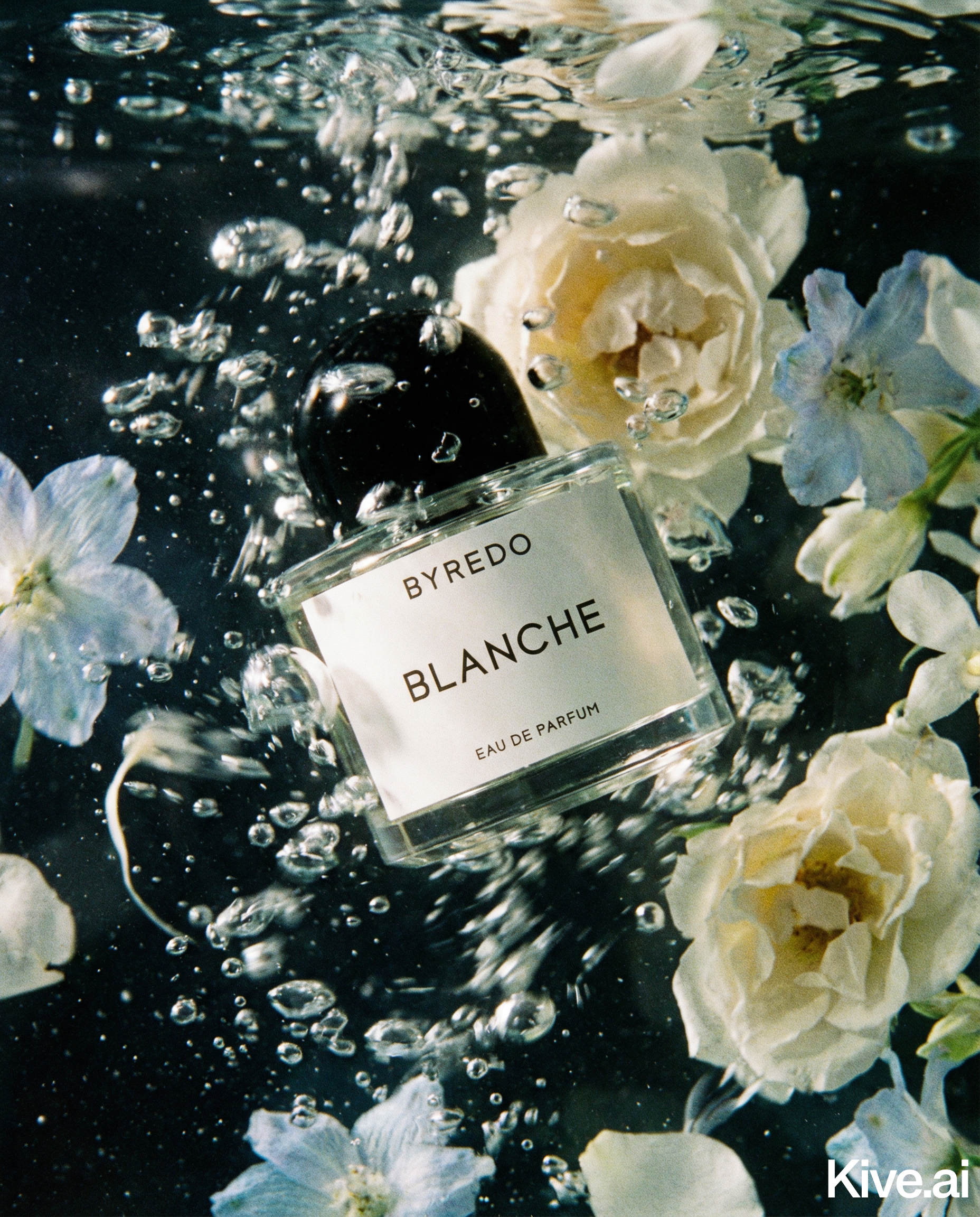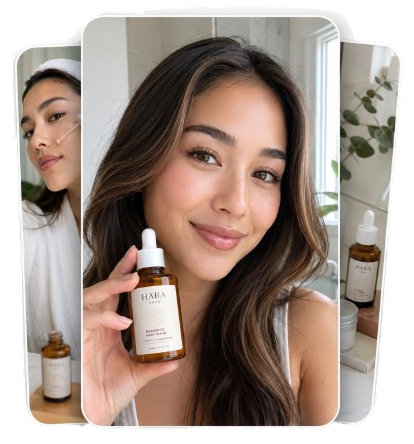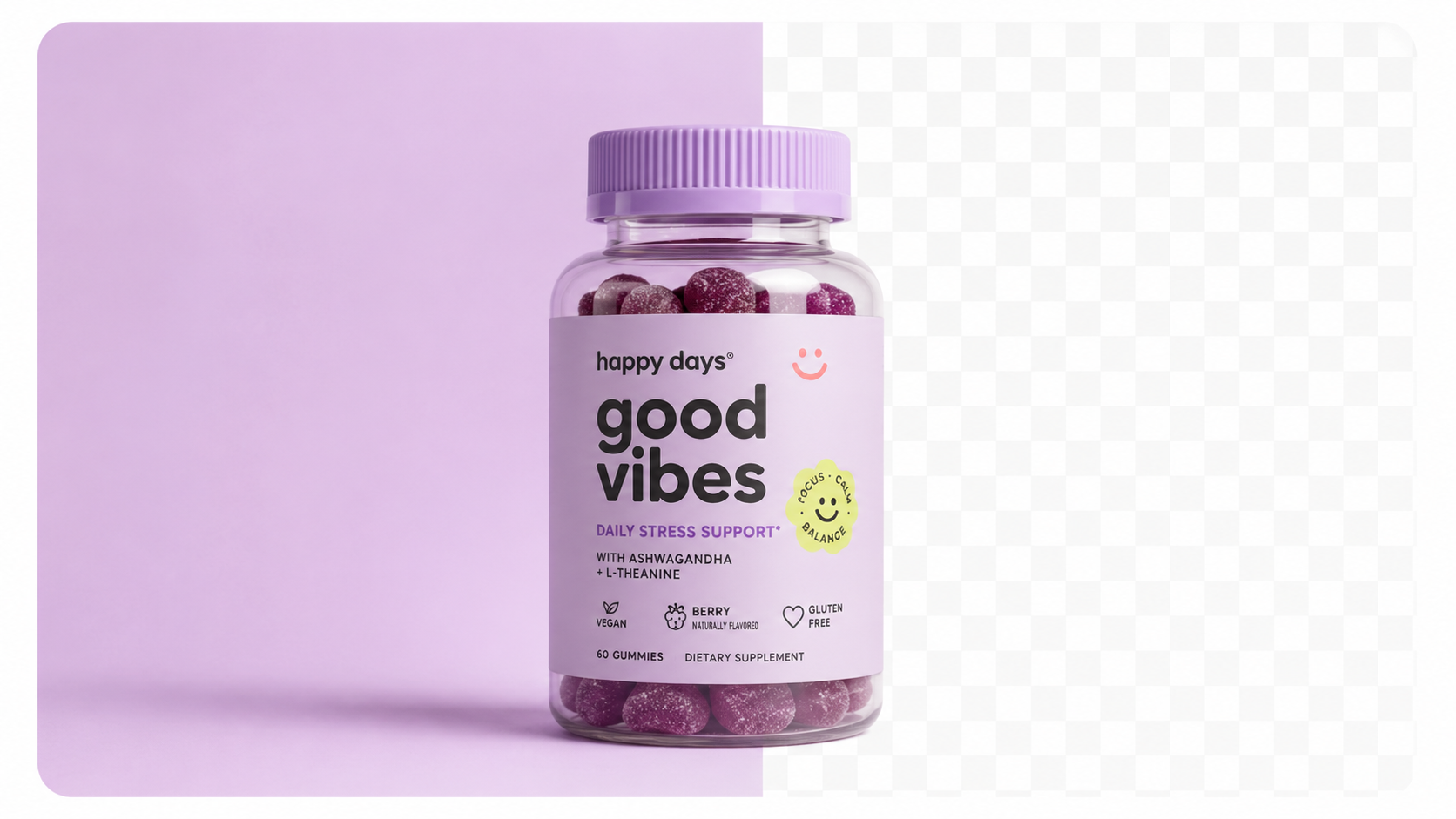
A studio shot proves a product exists. A lifestyle shot proves it fits into someone's life — held in a hand, worn on a body, sitting on a real kitchen counter instead of a seamless white sweep. That's why most product pages run both: the studio shot for clarity (size, color, detail), the lifestyle shot for context (how it's actually used, by someone who looks like the shopper).
The research behind this is more direct than most ecommerce advice. In large-scale usability testing, Baymard Institute found that 56% of shoppers immediately begin exploring product images before reading anything else on a product page — and that only 25% of ecommerce sites provide images sufficient for a shopper to properly evaluate what they're buying. Low-quality or under-informative photography was a consistent driver of cart abandonment in the same testing.
Source: Baymard Institute, ecommerce usability research — baymard.com/learn/ecommerce-cro.
Lifestyle imagery specifically shows up as a real lever on top of that baseline, not just a nice-to-have. Several independently reported industry benchmarks put the conversion lift from adding lifestyle images alongside studio shots somewhere in the 20–45% range — the exact figure moves by category and methodology (apparel and home goods tend to show the largest lifts; commodity items less), but the direction holds up consistently: shoppers who can picture a product in use buy it more often than shoppers looking at it floating on white. See a category-by-category breakdown of lifestyle vs. studio photo performance for the fuller numbers.
That research is also exactly why "which AI platform makes believable lifestyle imagery" is a real, distinct question rather than a subset of "which AI platform makes good product photos." Studio white-background generation is close to solved — nearly every tool in this category handles it well now. Lifestyle generation is harder: it has to get scene lighting right, keep the product's exact proportions and color accurate, and avoid the slightly-off compositing that reads as fake at a glance.
1. Sellable — generates lifestyle scenes directly from an uploaded product photo, alongside studio white-background and on-model shots from the same upload. What separates it from single-purpose lifestyle generators is scope and batch: a full catalogue of SKUs can run through lifestyle scene generation overnight instead of one image at a time, and the same platform also covers the on-model and video output a modern listing page needs beyond the lifestyle shot itself. From $49/month, batch generation included at every tier.
2. Booth.ai — the closest philosophical match to Sellable in this list: rather than compositing a cutout onto a stock-style backdrop, it regenerates the scene around the product, which tends to hold up better on reflective or transparent materials than pure compositing tools. Batch generation and custom scene control sit behind its $49/month Pro tier, so it's worth checking whether the $25/month entry price actually covers a full catalogue workflow before committing.
3. Claid.ai — built for volume and API integration over point-and-click art direction, bundling background replacement, upscaling, and lifestyle scene generation into a credit-based system. Reported pricing runs from roughly $15/month for basic operations up to $49/month for the tier that unlocks video generation and custom models — a structure aimed at teams managing catalogues programmatically rather than uploading images one at a time through a UI.
4. Pebblely — the fastest way in this list to get an attractive themed lifestyle background with minimal setup, popular with smaller catalogues that need a handful of solid scenes rather than deep customization. At $19/month it's the cheapest dedicated option here, though it's a lighter tool overall: no on-model output, and less compositional control than Booth.ai or Flair AI.
5. Flair AI — the pick for brands that want art-directed, editorial-style lifestyle compositions — a perfume bottle on a marble plinth, a specific prop arrangement — rather than a fast preset. It has the steepest learning curve of this group and no batch mode, so it suits a handful of hero images better than a full catalogue refresh. From $38/month.
See how Sellable generates lifestyle scenes from one product photo →
Three things, in roughly the order they go wrong:
Sellable turns a single product photo into studio-quality images, cinematic video, and on-brand campaigns — in under 60 seconds.
Get started free →Tools built around true scene *generation* around a preserved product — Sellable and Booth.ai, from the ranking above — tend to handle all three more consistently than tools built around cutout compositing onto a stock or AI-generated backdrop. That's worth testing directly with your own product before committing to a plan: performance on this specific point varies meaningfully by material, and glass, fabric, and reflective metal remain the hardest categories across the entire AI photography space, not just this list.
Choose Sellable if you need lifestyle imagery alongside studio and on-model shots, at catalogue scale, from one platform.
Choose Booth.ai if stills-only lifestyle generation with strong product preservation is the whole job and you don't need on-model or video output.
Choose Claid.ai if you're integrating via API into an existing catalogue-management workflow rather than generating images one at a time in a UI.
Choose Pebblely if you have a small, fairly stable catalogue and want quick, attractive preset scenes without a learning curve.
Choose Flair AI if you're producing a handful of hero images for a campaign and want full art-directed control rather than batch throughput.
For more on how lifestyle and studio imagery work together rather than compete, see how product photos impact conversion rate and how to turn product photos into lifestyle images with AI. For the broader tool landscape beyond lifestyle specifically, see Best AI Product Photography Tools in 2026.
Do I still need studio white-background photos if I have lifestyle images?
Yes — most marketplaces (Amazon, Etsy, Google Shopping) require or strongly favor a pure white-background main image, with lifestyle images as supporting gallery shots. Studio and lifestyle photography solve different jobs on the same listing rather than replacing each other.
Can AI lifestyle imagery actually rival a real studio lifestyle shoot?
For most ecommerce categories, yes, at listing-image resolution — the research above shows shoppers respond to context and realism more than to whether a human photographer and physical set were involved. Highly tactile or unusual categories (large furniture, live food) are where some brands still commission occasional real shoots for hero campaign assets.
What's the cheapest way to get real lifestyle imagery for a small catalogue?
Pebblely's $19/month tier is the least expensive dedicated option in this list. If you also need studio and on-model shots from the same upload, Sellable's $49/month entry tier covers more ground per dollar for a brand that needs the full set rather than lifestyle alone.
Which platform handles the largest catalogues?
Sellable and Claid.ai are both built around batch or API workflows suited to catalogues in the hundreds of SKUs; Pebblely and Flair AI suit smaller, more curated sets of hero images better.
Do these tools work for every product category?
Mostly, with the same caveat across the whole AI photography space: glass, mirrored, and complex-reflective products are the hardest test case for every tool on this list. Test with your actual product before rolling any platform out catalogue-wide.
Cost & Comparisons Cost & Comparisons Cost & Comparisons Cost & Comparisons Cost & Comparisons Cost & Comparisons Cost & Comparisons Cost & Comparisons Cost & Comparisons Product Description Generator Hashtag Generator Ad Headline Generator Product Title Generator Product Bullet Point Generator Collection Description Generator Facebook Ad Copy Generator TikTok Ad Script Generator Google Shopping Ad Generator Sign up for free and transform your product photography with Sellable.
Get started for free